A pomodoro timer that feels like a ritual, not an alarm
The pomodoro technique is simple: work in short, fully-committed blocks — classically 25 minutes — then take a 5-minute break. After four blocks, take a longer one. The magic isn’t the numbers; it’s the contract you make with yourself. For the next block, the work in front of you is the only thing that exists.
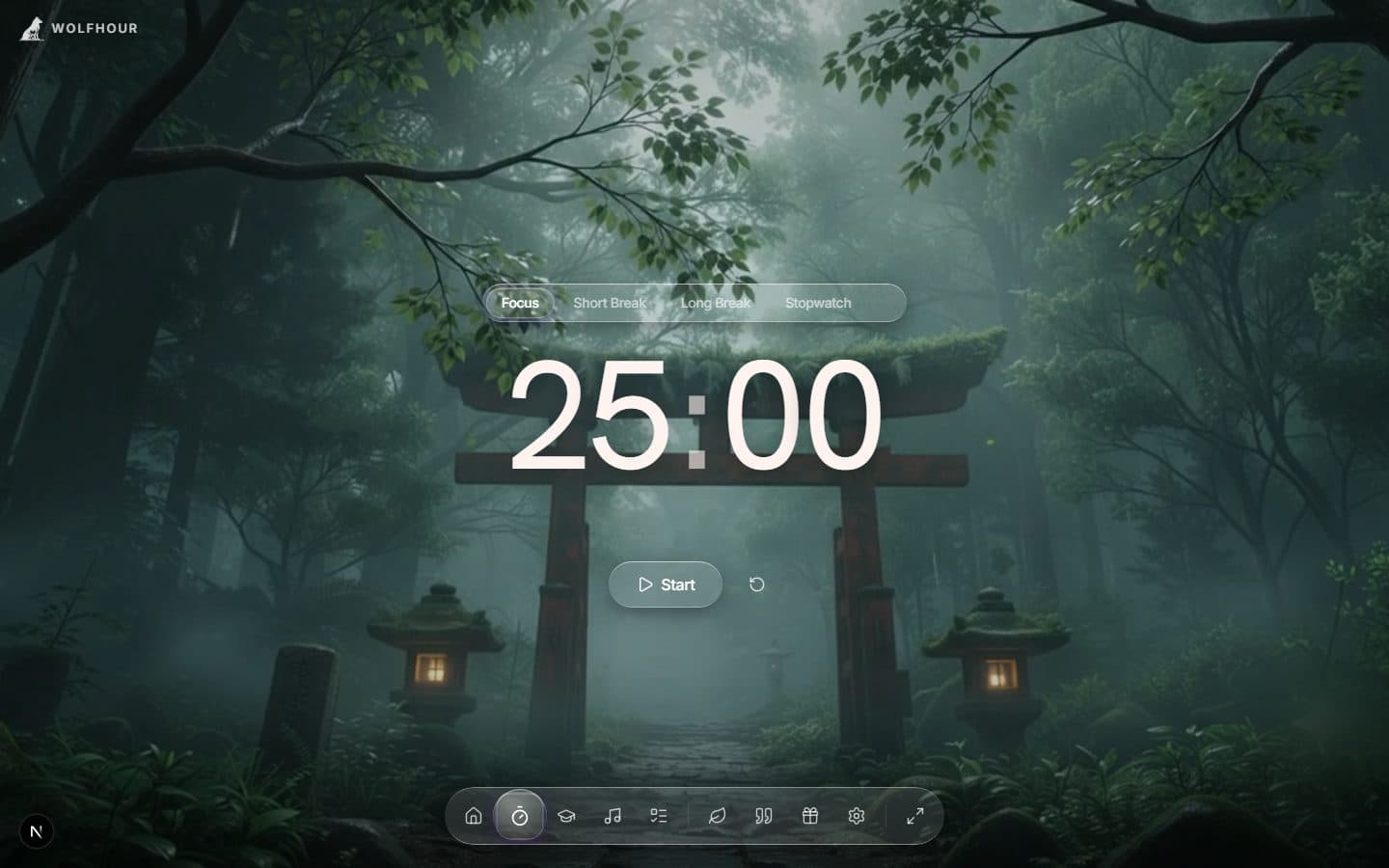
Wolfhour’s timer is built around that contract. Pick Focus, Short Break, Long Break, or a count-up Stopwatch; the scene keeps breathing behind the clock, and when time is up you get a soft two-note chime — no jarring buzzer, no red flashing zero. The room stays calm.
What is the pomodoro technique?
Named after a tomato-shaped kitchen timer — pomodorois Italian for tomato — the technique was developed by Francesco Cirillo in the late 1980s. The original tomato timer set 25-minute work intervals, and the name stuck. It has outlived a thousand productivity trends for one reason: it turns “study all evening” — a plan your brain quietly refuses — into a sequence of small, finishable promises. One block. Then a breath. Then another block. The timer holds the discipline so you don’t have to.
Why does pomodoro work for studying?
- It shrinks the start.“Study organic chemistry” is a wall. “25 minutes on reaction mechanisms” is a door. Small blocks beat willpower battles.
- Breaks are scheduled, not stolen. When rest is part of the plan, checking your phone stops being a guilty escape and starts being a timed pause.
- Blocks are countable. Six blocks is a good morning. You can see your effort, which is exactly what streaks and session stats in Wolfhour are for.
How long should a pomodoro be?
Start with the classic 25 minutes. It’s short enough that starting never feels like a commitment, and long enough to get real reading or problem-solving done. Two honest adjustments worth knowing:
- Struggling to start at all?The 25 is the point — don’t lengthen it. Finishing a small block rebuilds the habit faster than heroically failing a big one.
- Deep in a long proof or essay?Don’t let the bell amputate real flow. Switch to the stopwatch and let the session run — the technique is a ladder into concentration, not a cage around it.
How Wolfhour runs it
Wolfhour keeps the classic shape: a 25-minute focus block, a 5-minute short break, and a 15-minute long break, one tap apart. No settings maze — the timer’s job is to disappear behind the work. For open-ended deep work, the per-subject stopwatches in Aspirant mode run as long as you do. And unlike a bare timer tab, the block runs inside your scene — the backdrop and your sound mix keep going while you work.
The environment half of the technique
Most pomodoro advice ignores what your senses do during the block. A consistent backdrop — rain on glass, a quiet café hum, slow waves — acts as a cue: this sound means we’re working. Layer your own mix from Wolfhour’s study sounds, keep it identical across sessions, and starting a block begins to feel automatic.
Between blocks, the room rests with you
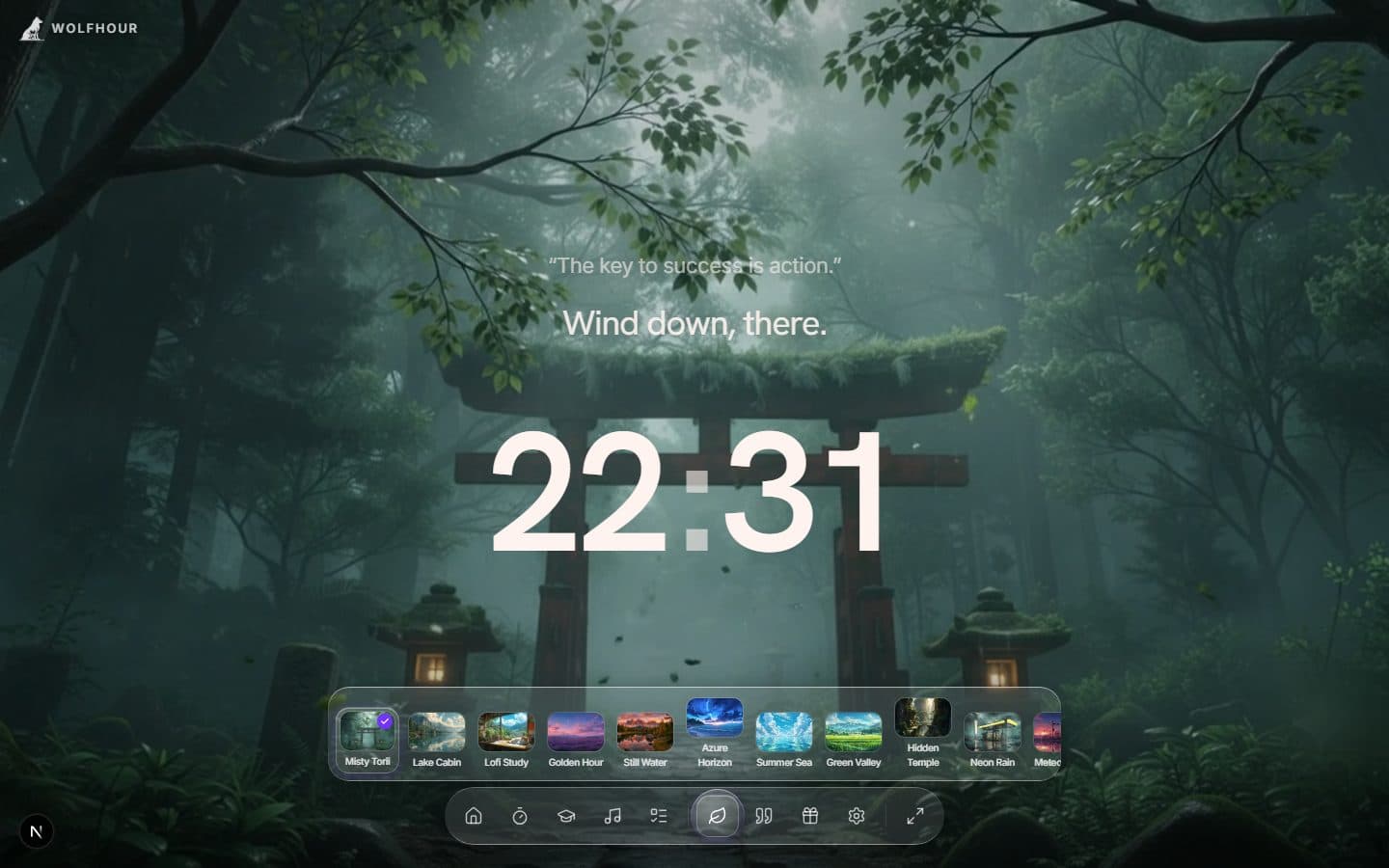
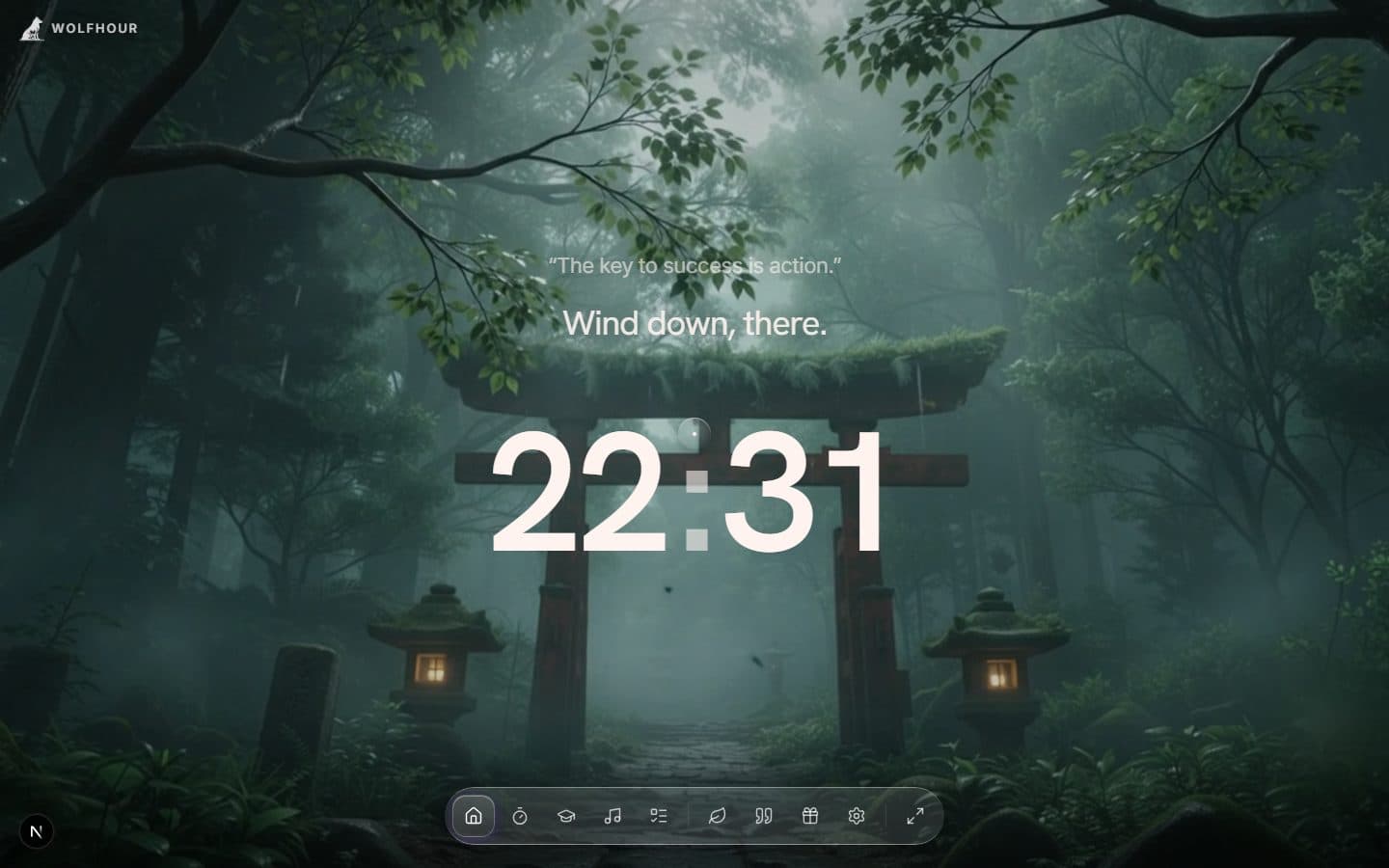
When a break starts, you’re not staring at a dead settings screen. The dashboard returns to a greeting, a quote, and a big calm clock — in whichever face you’ve picked, from flip clock to LED to ember. Five minutes later, one tap puts the next block on.
If you’re preparing for a competitive exam and want your blocks tracked per subject — with trends, streaks, and honest totals — that’s what Aspirant mode was built for: a per-subject study tracker with goals, streaks, and a daily trend chart under an exam countdown.
Pomodoro questions, answered
How many pomodoros should I do in a day?
Count blocks, not hours. Four focused blocks (about two hours of true focus) is a solid study day for most people; eight is a heavy one. Consistency across days beats a one-off marathon.
What should I do during the 5-minute break?
Stand up, stretch, get water, look out a window — anything that isn't a screen. The break's job is to reset your attention, and a feed scroll doesn't reset anything.
Does the pomodoro technique help with ADHD or a wandering mind?
Many people with attention difficulties find short, externally-timed blocks easier than open-ended sessions, because the timer carries the discipline. If 25 minutes feels long, finish smaller blocks and let the streak build — momentum matters more than block length.
Is the Wolfhour pomodoro timer free?
Yes — the timer, scenes, and sounds are all free, with no signup needed to start. It also works offline once installed as an app.